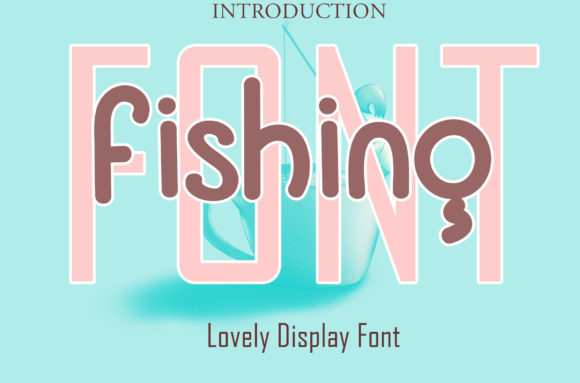
Font Fishing: The Whimsical Typeface That Brings Joy to Your Designs
There's a particular kind of magic that happens when you find a font that makes you smile the moment you see it. You know the feeling—that instant connection where the curves, the weight, and the personality of the letterforms just click with what you're trying to create. Font Fishing is exactly that kind of typeface. It's playful without being childish, whimsical without sacrificing clarity, and joyful in a way that genuinely translates to the viewer. If you've been searching for a display font that carries warmth and character, this one deserves a closer look.
At its core, Font Fishing is a premium display font designed with creativity in mind. The letter shapes have a rounded, friendly quality that feels hand-crafted rather than mechanically produced. There's a subtle bounce to the baseline, gentle variations in stroke width, and just enough quirkiness in individual characters to give the entire typeface a distinctive voice. It doesn't try to be everything to everyone—and that's precisely what makes it work so well for specific projects.
Where This Typeface Truly Shines
Think about the last time a piece of packaging caught your eye from across a store aisle. Or the moment a social media graphic stopped your scroll. Chances are, typography played a significant role. Font Fishing excels in contexts where you want to communicate approachability, fun, and authenticity. Children's book covers, toy packaging, birthday invitations, family-oriented branding, bakery logos, craft shop signage—these are the spaces where this font naturally belongs.
But its usefulness extends further than you might initially expect. Content creators who produce YouTube thumbnails, podcast artwork, or blog headers often struggle to find typefaces that feel energetic without looking amateurish. Font Fishing bridges that gap beautifully. It has enough design sophistication to feel intentional and professional, yet enough personality to stand apart from the sea of clean, minimalist sans serif fonts dominating digital spaces right now.
Small business owners, particularly those in creative industries, often face a frustrating dilemma. They want their branding to feel warm and personal, but they also need it to look credible. A handmade soap company, a children's photography studio, a local ice cream shop, or a boutique stationery brand could use Font Fishing as a cornerstone of their visual identity. The font communicates craftsmanship and care—qualities that resonate deeply with customers seeking authentic, small-scale products and services.
Practical Applications Across Design Projects
Let's talk specifics, because understanding where and how to use a typeface matters more than simply liking how it looks. Font Fishing works exceptionally well in logo design when you need a wordmark that feels approachable and memorable. Pair it with a simple icon or let it stand alone—the character of the letterforms carries enough visual weight to anchor a brand mark without additional embellishment.
For packaging design, this font brings an immediate sense of delight. Imagine it on a children's cereal box, a bag of artisanal candy, or a set of handmade greeting cards. The whimsical quality signals to the buyer that what's inside is meant to be enjoyed. It sets an expectation of fun and quality simultaneously, which is a difficult balance for many typefaces to strike.
Social media graphics benefit enormously from fonts with personality. In feeds saturated with generic templates, a distinctive display font like Font Fishing helps your posts stand out. It works particularly well for quotes, announcements, sale promotions, and event graphics where you need the text to grab attention quickly. Instagram stories, Pinterest pins, and Facebook cover images all become more engaging when the typography has genuine character.
On websites and blogs, Font Fishing serves best in limited, strategic doses. Use it for headlines, section titles, or featured callouts rather than body text. A whimsical display font used for long paragraphs creates readability issues, but when reserved for high-impact moments on a page, it adds tremendous visual interest. Think of it as the seasoning in a meal—a little goes a long way, and the right amount transforms the entire experience.
Pairing Font Fishing With Other Typefaces
One of the most practical skills in design is knowing how to combine fonts effectively. Font Fishing, with its playful display characteristics, pairs beautifully with clean sans serif fonts for body text. A typeface like a simple geometric sans serif or a humanist sans serif provides the readability and neutrality that complements Font Fishing's personality without competing with it.
You might also experiment with pairing it alongside a simple serif font for editorial layouts or blog designs. The contrast between a whimsical display heading and a classic serif body text creates visual hierarchy that guides the reader's eye naturally. This kind of thoughtful font pairing elevates the overall design and signals professionalism, even in casual or creative contexts.
The key principle to remember is contrast without conflict. You want your paired typefaces to feel different enough to create visual interest but similar enough in spirit to feel cohesive. Font Fishing's friendly, rounded character works best alongside typefaces that share a sense of warmth or openness. Avoid pairing it with extremely rigid, corporate typefaces—the stylistic clash can feel jarring and undermine the intentional mood you're trying to create.
Readability and Professional Presentation
Any honest conversation about display fonts needs to address readability. Font Fishing maintains excellent legibility at larger sizes, which is exactly where display fonts belong. The letterforms are distinct enough that individual characters remain recognizable, even with the playful stylistic touches. This matters more than you might think—nothing undermines a design faster than text that viewers struggle to decipher.
At smaller sizes, however, the decorative qualities that make this font charming can begin to work against clarity. This isn't a flaw; it's simply the nature of display typography. Smart designers understand this and use Font Fishing strategically—large headings, featured text, standalone words or short phrases—while relying on more conventional typefaces for longer passages and smaller text sizes.
When presenting work to clients or customers, this kind of typographic awareness makes a real difference. It shows that you've considered not just aesthetics but also function. The best designs look beautiful and work effectively, and thoughtful font selection is a significant part of achieving both goals simultaneously.
Licensing and Getting Started
Before incorporating any font into a commercial project, reviewing the licensing terms is essential. Font Fishing comes with commercial licensing, which means you can confidently use it in client work, products for sale, branded materials, and marketing assets without legal concerns. Always verify the specific license details to ensure your intended use is covered—whether that's digital products, printed merchandise, or broadcast media.
Start by testing Font Fishing in a current project. Drop it into a social media template, try it as a headline on a website mockup, or sketch out a quick logo concept. Seeing a font in context tells you far more than viewing it in a specimen sheet. Pay attention to how it feels alongside your existing brand colors, imagery, and other design assets. The right typeface doesn't just look good in isolation—it enhances everything around it.
Typography choices quietly shape how people perceive your work. A font like Font Fishing makes a deliberate statement: that your brand or project values joy, creativity, and human connection. Used thoughtfully, it becomes more than a design asset—it becomes part of your voice.