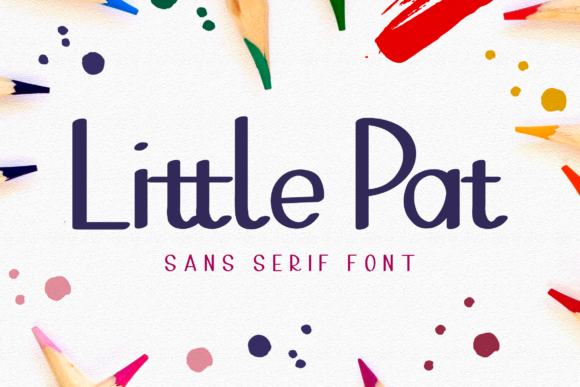
Little Pat 1 Font: Your Secret Weapon for Clean, Modern Design
You know that moment when you find a typeface that just... works? It doesn't fight with your layout, it doesn't steal attention from your message, and it looks equally sharp on a business card and a billboard. That's the sweet spot Little Pat 1 Font occupies. It's a sans serif typeface built for people who need versatility without sacrificing personality—designers juggling multiple clients, small business owners building a brand from scratch, content creators who want their graphics to feel polished without hours of fiddling.
Little Pat is a simple and adaptable sans serif font. It will elevate a wide range of crafting ideas, from cards to branding, labels, and much more. Add it confidently to your favorite creations, and let yourself be amazed by the outcome generated. But beyond that promise, there's a practical reality worth exploring: how does a font like this actually fit into real projects, and where does it genuinely shine?
What Makes This Typeface Stand Out in a Crowded Market
The sans serif category is massive. You've got geometric options, humanist designs, neo-grotesques, and everything in between. Little Pat 1 Font carves out its own space by leaning into simplicity without feeling sterile. The letterforms are clean and balanced, with enough subtle character to avoid that generic "default font" look that plagues so many free alternatives.
What you'll notice first is the consistency. Every glyph feels like it belongs to the same family—no awkward curves, no inconsistent stroke weights, no letters that look like they were designed by a different hand. That kind of internal harmony matters more than most people realize. When your typography is visually cohesive, your entire design reads as more intentional and trustworthy.
The proportions work well at both small and large sizes. This is a common pitfall with display fonts that look gorgeous at 72pt on a poster but turn muddy at 14pt in a paragraph. Little Pat handles the transition gracefully, which opens up a wider range of applications than many creative fonts can claim.
Real-World Applications That Actually Matter
Let's talk about where this font earns its keep. If you're running a small business, you're probably creating assets across multiple channels—your website, social media templates, printed materials, maybe even packaging. A typeface that works across all of those contexts saves you time and keeps your brand identity tight.
Branding and Logo Design: Little Pat 1 Font works well as a primary typeface for brands that want to project modernity and approachability. Think boutique shops, lifestyle brands, wellness companies, creative studios, or tech startups that want to feel human rather than corporate. Pair it with a complementary script font or handwritten font for contrast, and you've got a flexible brand system.
Packaging Design: Labels and packaging demand legibility at small sizes, especially when regulatory text or ingredient lists are involved. The clean geometry of this typeface keeps things readable even when space is tight. It also photographs well, which matters enormously for e-commerce listings and social media unboxing content.
Social Media Graphics: Instagram posts, Pinterest pins, Facebook ads, YouTube thumbnails—these all require fonts that grab attention in a split second while remaining easy to scan. Little Pat delivers that clarity. Because it doesn't have overly decorative features, it integrates seamlessly with photos, illustrations, and background textures without creating visual noise.
Print Materials: Business cards, flyers, brochures, menus, event programs, thank-you cards. The list goes on. A reliable sans serif font is the backbone of most print collateral, and having one that looks professional without being boring gives you a real advantage.
Digital Products and Editorial Layouts: If you sell templates, create ebooks, design worksheets, or produce any kind of downloadable content, typography consistency is non-negotiable. Little Pat 1 Font provides that uniform look across headings, subheadings, and body text without requiring multiple font families.
Matching Typography to Your Project Goals
Choosing a font isn't just about aesthetics—it's about communication. The typeface you select sends a message before anyone reads a single word. A playful handwritten font tells a different story than a structured sans serif. Neither is better; they're just suited to different contexts.
Ask yourself a few questions before committing to any typeface, including this one:
- Who is my audience? A younger demographic might respond to something more expressive, while a professional audience often expects restraint and clarity.
- What's the primary medium? A font that dominates a poster might disappear on a mobile screen. Test across your most common use cases.
- How much text am I working with? Long-form reading demands different typographic choices than a three-word headline. Little Pat handles both reasonably well, but knowing your primary use helps you fine-tune size, spacing, and weight.
- What other design elements are in play? If your brand relies heavily on photography, an understated font won't compete with your images. If you're working with minimal layouts, the font carries more visual weight and needs to hold its own.
The best approach is to mock up a few real scenarios before finalizing your choice. Drop the font into your actual project files—not a blank canvas, but the real thing. See how it interacts with your color palette, your imagery, your layout structure. That's where you'll know whether it truly fits.
Font Pairing Strategies That Work
One typeface rarely does all the work alone. Even the most versatile premium font benefits from a thoughtful pairing. With Little Pat 1 Font as your foundation, consider these approaches:
Pair with a serif font for editorial layouts, blog posts, or any project that mixes headlines with body copy. The contrast between sans serif and serif creates visual hierarchy naturally, guiding the reader's eye from heading to paragraph.
Combine with a script font for invitations, greeting cards, or feminine branding. The structured simplicity of Little Pat grounds the flourishes of a script, preventing the design from feeling too ornate.
Use alongside a handwritten font for a casual, approachable vibe. This works particularly well for lifestyle blogs, social media content, and packaging aimed at a younger market.
The key principle is contrast without conflict. You want your paired fonts to feel like they're having a conversation, not an argument. Test different combinations at various sizes and weights. Sometimes a pairing that looks odd at first glance becomes your favorite once you see it in context.
Licensing, File Formats, and the Practical Stuff
Before you download and start designing, take a moment to review the licensing terms. Commercial use is a big deal—if you're creating assets for clients, selling products, or monetizing content, you need to make sure your license covers that. Most premium font offerings include commercial licensing, but the specifics vary. Some licenses cover unlimited projects; others are per-seat or per-project. Read the fine print.
Also check what's included in the package. Does it come with multiple weights? Are there italic or condensed versions? What about special characters, ligatures, or multilingual support? These details might not matter for a quick social media graphic, but they become critical for branding systems, editorial design, or packaging that needs to work across markets.
File format matters too. TTF and OTF are standard for desktop use. If you're embedding fonts on a website, you'll likely need WOFF or WOFF2 files. Make sure the font package includes what you need, or that conversion is straightforward.
Building Visual Consistency Across Your Brand
Here's something experienced designers understand intuitively but rarely explain to clients: typography is one of the strongest tools for brand recognition. Think about how instantly you recognize certain brands just by their letterforms. That level of recognition comes from consistent, repeated use of the same typeface across every touchpoint.
When you adopt Little Pat 1 Font as part of your design assets, commit to using it systematically. Define clear rules: which weight for headlines, which for body text, which for captions and labels. Document your choices in a simple style guide, even if it's just a one-page reference sheet. That consistency compounds over time. Your audience starts associating that visual language with your brand, even subconsciously.
This is especially important for small businesses and independent creators who don't have the budget for a full rebrand every year. A strong, well-chosen typeface becomes a long-term asset. It ages well, adapts to new platforms, and maintains its readability as design trends shift around it.
The beauty of a clean sans serif like this one is its staying power. While decorative fonts come and go with trends, a well-crafted modern typography foundation remains relevant for years. That's not just good design—it's smart business.